Motorcycle Accident Claims in Illinois: What Makes Them Different
By Long Law Group — Personal Injury Attorneys proudly serving families throughout Naperville, Warrenville, DuPage County, Cook County, Will County, Kane County, and the greater Chicagoland area.
Summer riding season is here across Naperville, DuPage County, and the Chicagoland area. Weekend rides along the DuPage County backroads, commutes on I-88 and I-355, cruise nights in the western suburbs. More motorcycles are on the road right now than at any other time of year.
And more crashes happen this time of year too.
A motorcycle accident is not just a car accident on two wheels. The injuries are worse, the insurance tactics are more aggressive, and the legal issues are genuinely different. If you or someone you care about was hurt in a crash, here is what sets these claims apart and what you can do right now to protect your rights.
Why Motorcycle Injuries Hit Differently
A car surrounds you with a steel frame, airbags, and a seatbelt. A motorcycle gives you none of that. Even a relatively low-speed collision can cause life-altering harm, and we have seen it happen.
Common injuries in motorcycle crashes include:
- Traumatic brain injuries, even when a helmet is worn
- Spinal cord injuries and fractures
- Road rash severe enough to require skin grafts
- Broken bones, often multiple at once
- Internal injuries that may not show symptoms for hours or days
Because the stakes are higher, getting prompt medical care and documenting everything matters even more than in a typical car crash. Injuries that seem minor at the scene have a way of revealing themselves later, and gaps in treatment become ammunition for insurers.
Illinois Has No Helmet Law, But Insurers Will Use That Against You
Illinois is one of only a handful of states with no universal motorcycle helmet requirement. You are legally allowed to ride without one.
That legal freedom comes with a catch. After a crash, insurance adjusters routinely argue that an unhelmeted rider made their injuries worse and should recover less, especially in head-injury cases. It is a pressure tactic, and it works on people who do not know how to fight it.
The reality: Illinois courts have generally been skeptical of letting juries hear about helmet non-use, reasoning that the legislature deliberately chose not to require one. Not wearing a helmet does not cause a crash. A negligent driver does. An experienced attorney knows how to push back on that argument before it gains traction.
How Comparative Negligence Affects Your Recovery
Illinois follows a modified comparative negligence rule. You can recover compensation as long as you are not more than 50% at fault for the crash. At 51% or more, you recover nothing.
If you share some fault, your compensation is reduced proportionally. A $100,000 award with 20% fault assigned to you becomes $80,000.
This is exactly why insurers work so hard to pin blame on riders, pointing to speed, lane position, or gear choices. Every percentage point of fault they shift onto you saves them money. Building a clear, well-documented case from the start is the best defense against that strategy.
The “I Didn’t See the Motorcycle” Problem
A large share of motorcycle crashes happen because a driver simply did not look. Left-turn collisions, lane-change crashes, intersection accidents: these are the most common scenarios in Chicagoland, and in most of them, the driver had every opportunity to see the rider and didn’t.
What makes it harder is that some drivers, and some jurors, carry an unfair assumption that motorcyclists are reckless. Countering that bias with facts is part of what a good attorney does: building a record that shows the rider followed the law and the other driver caused the crash.
What to Do After a Motorcycle Accident
If you are able to act at the scene, these steps can make a significant difference to your health and your claim:
- Get medical attention immediately, even if you feel fine. Adrenaline masks serious injuries.
- Call the police and make sure a crash report is filed.
- Document the scene with photos of the vehicles, the road, and your injuries.
- Get contact and insurance information from the other driver and any witnesses.
- Do not admit fault or downplay your injuries to anyone, especially the other driver’s insurer.
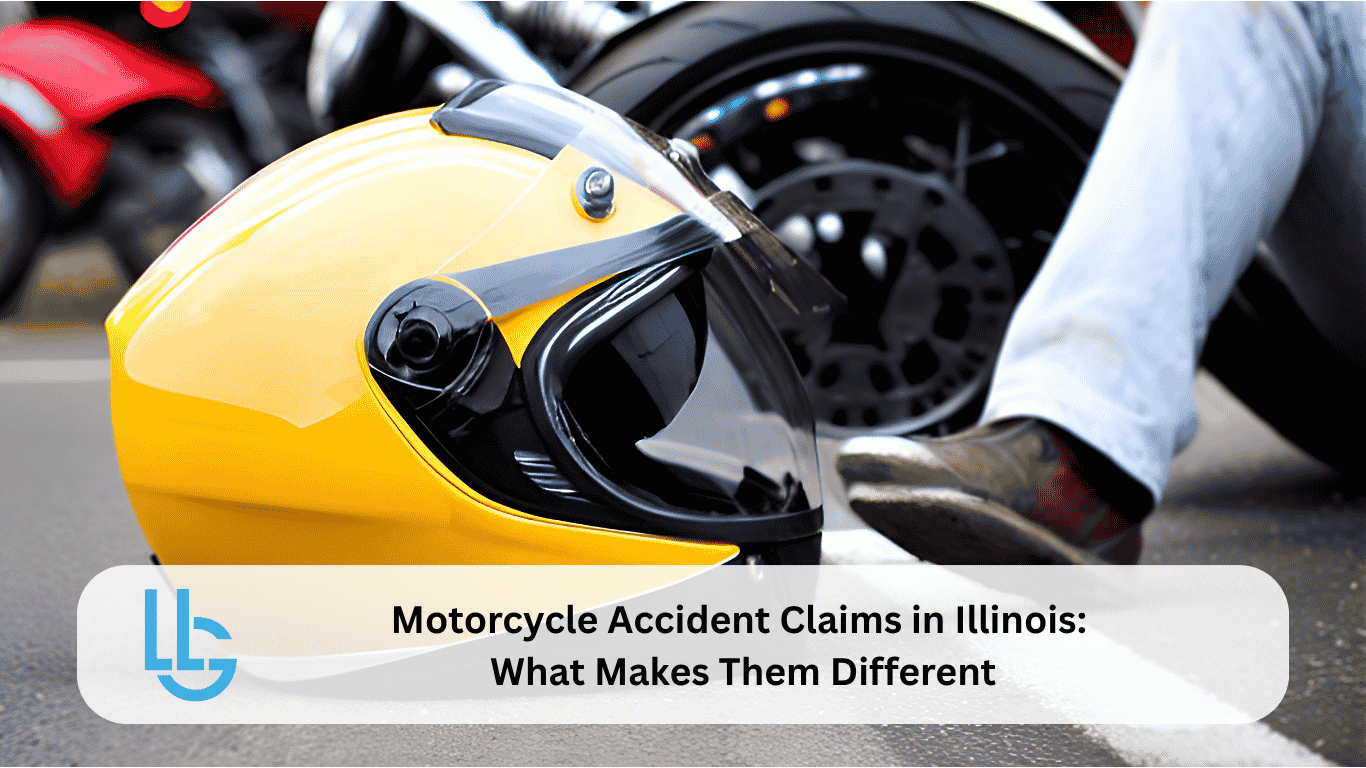
- Preserve your gear. Your helmet, jacket, and bike can all be evidence.
- Contact a motorcycle accident attorney before giving a recorded statement to any insurance company.
What If the Driver Has No Insurance?
Not every driver carries enough insurance, and some carry none at all. If an uninsured or underinsured driver caused your crash, you may still have options.
Many motorcycle policies include uninsured and underinsured motorist coverage, which can step in when the at-fault driver cannot pay. Hit-and-run crashes, which happen with frustrating frequency in motorcycle cases, may also fall under this coverage. Reviewing your own policy early is important, and an attorney can help you identify every available source of recovery.
What Damages Can You Recover?
Injured riders in Illinois may be entitled to compensation for:
- Medical expenses, both current and future
- Lost wages and reduced earning capacity
- Pain and suffering and emotional distress
- Property damage to your motorcycle and gear
- Long-term care costs for catastrophic injuries
How Long Do You Have to File?
In Illinois, the statute of limitations for most personal injury claims is two years from the date of the accident. Wrongful death claims carry the same general deadline. These limits can vary depending on the circumstances, so speaking with an attorney sooner rather than later is always the safer move.
Questions We Hear From Injured Riders
Can I still recover damages if I wasn’t wearing a helmet?
Yes. Illinois has no helmet law, so not wearing one is not illegal and generally cannot be treated as fault for the crash itself. Insurers may still argue it worsened your injuries, but courts have largely limited that argument. An attorney can help protect your claim if that tactic comes up.
What if the police report says I was partly at fault?
A police report is not the final word. Under Illinois comparative negligence rules, you can still recover as long as you are not more than 50% at fault. An attorney can investigate independently, gather additional evidence, and challenge an inaccurate fault determination.
How much is my motorcycle accident claim worth?
It depends on your injuries, medical costs, lost income, long-term effects, and the degree of fault involved. Because motorcycle injuries tend to be serious, these claims can be substantial, which is exactly why insurers fight them hard. A consultation can give you a realistic picture of what you are dealing with.
Do I really need a lawyer for a motorcycle accident?
Motorcycle claims involve higher stakes, more aggressive insurers, and legal issues that do not come up in ordinary car accident cases, including the helmet argument and built-in bias against riders. Having an attorney levels the playing field and lets you focus on recovering while someone fights for your interests.
You Should Not Have to Navigate This Alone
A motorcycle accident can upend your life in seconds. Medical bills pile up fast. Wages stop coming in. And somewhere in the middle of all of it, an insurance adjuster is building a case to pay you as little as possible.
At Long Law Group, we represent injured riders throughout Chicagoland area. We know the tactics insurers use against motorcyclists, and we know how to counter them. If you were hurt, talk to us before you talk to anyone else.
Hurt in a Motorcycle Accident? We Can Help.
Contact Long Law Group today for a consultation.
Phone: 312-344-3644 | Email: Contact@JLongLaw.com
Related Personal Injury Articles

Informational/Promotional Content: The content of this website is informational and/or promotional and not for the purpose of providing legal advice. To obtain legal advice, please contact Long Law Group or your attorney with respect to any particular issue or problem. No Attorney-Client Relationship Created by Use of this Website: Neither your receipt of information from this website nor your use of this website to contact Long Law Group creates an attorney-client relationship between you and Long Law Group or any of its employees. As a matter of policy, Long Law Group does not accept a new client without first investigating for possible conflicts of interest and obtaining a signed engagement letter. Accordingly, you should not use this website to provide confidential information about a legal matter of yours.