What to Do After a Car Accident in Illinois:
A 2026 Step-by-Step Guide
By Long Law Group — Personal Injury & Wrongful Death. Serving Naperville, Chicago, and DuPage County
Winter in Illinois brings beautiful snow-covered landscapes—and unfortunately, hazardous driving conditions. From black ice on I-88 to reduced visibility during Lake Michigan snow squalls, Illinois drivers face increased accident risks from November through March.
According to the Illinois Department of Transportation, weather-related crashes account for nearly 25% of all traffic accidents in the state. Whether you are navigating the Eisenhower Expressway during rush hour or driving through a Naperville neighborhood after a snowstorm, knowing the immediate steps to take after a crash is vital.
This comprehensive guide covers everything from the first 10 minutes at the scene to navigating Illinois comparative negligence laws.
Immediate Steps at the Accident Scene: The First 10 Minutes
Your actions in the moments following a collision can significantly impact your physical recovery and your ability to file a successful insurance claim.
1. Ensure Safety First
- Stop Immediately: Illinois law requires you to stop at the scene. Leaving can result in criminal “hit-and-run” charges.
- Check for Injuries: Adrenaline often masks pain. Thoroughly check yourself and passengers.
- Move to Safety: If vehicles are drivable and obstructing traffic, move them to the shoulder (permitted by Illinois law) after quickly documenting their position.
- Call 911: If anyone is injured or if the road is blocked, call emergency services immediately.
2. Call the Police (Even for “Minor” Accidents)
Do not let the other driver convince you to settle without police involvement. Illinois law requires a crash report for:
- Accidents involving injury or death.
- Property damage exceeding $1,500 (most modern bumper repairs exceed this).
- Accidents involving uninsured drivers.
Why you need a police report: It provides an official record of road conditions, driver statements, and a preliminary determination of fault. This is crucial evidence for DuPage and Cook County courts.
3. Document the Scene Thoroughly
Your smartphone is your best tool for evidence gathering. Before leaving the scene:
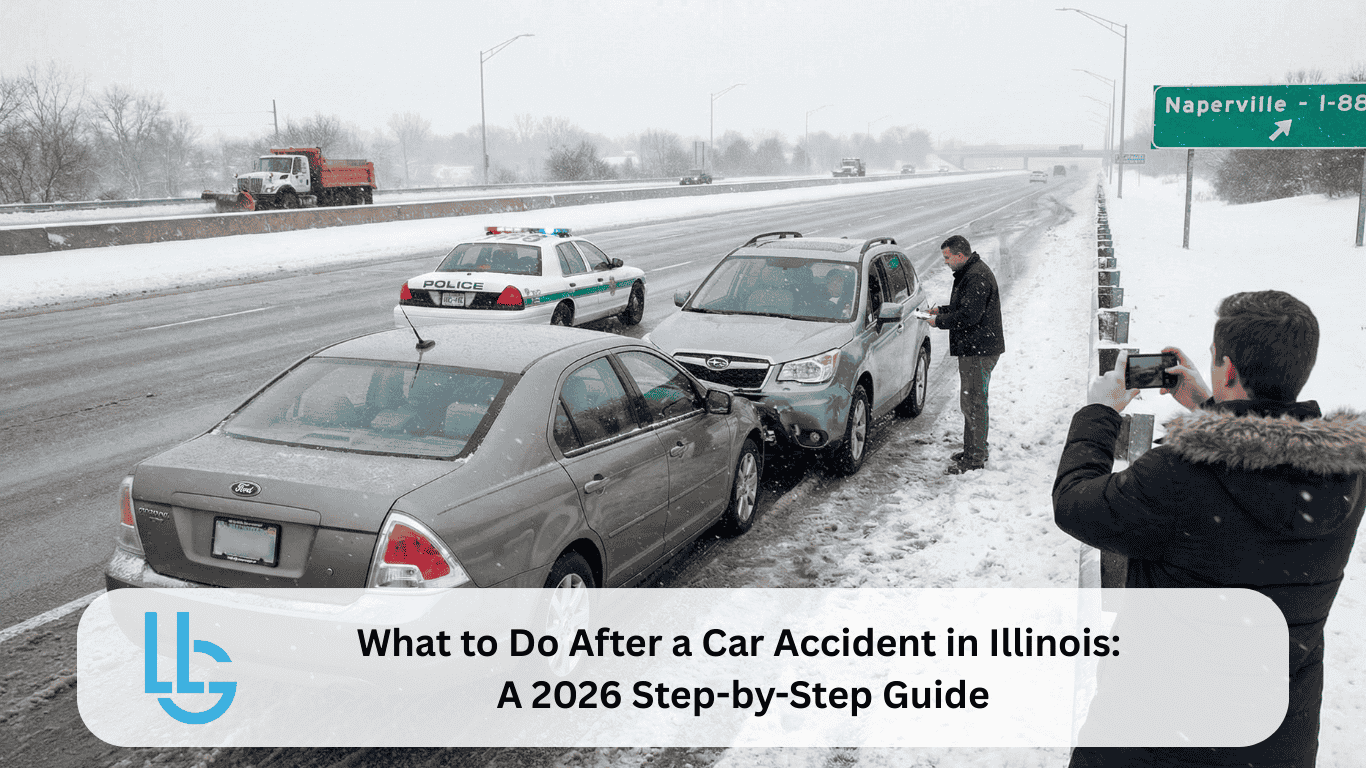
- Take Photos: Capture vehicle damage, skid marks, traffic signs, and weather conditions (ice, snow, fog).
- Record Video: Walk around the scene while narrating what happened.
- Note the Environment: Was a streetlight out? Was the other driver speeding due to icy conditions?
4. Exchange Information
Collect the following from all drivers involved:
- Full name and current address.
- Insurance company name and policy number.
- Driver’s license number.
- Vehicle make, model, and license plate.
Tip: Be courteous, but do not apologize or admit fault. A simple “I’m sorry” can be used against you by insurance adjusters later.
5. Identify Witnesses
If pedestrians or other drivers saw the crash, get their names and phone numbers immediately. Independent witnesses are often the deciding factor in disputed liability cases.
What NOT to Do After a Car Accident
Avoid these common mistakes that can devalue your injury claim:
- DON’T leave the scene. It is a crime in Illinois.
- DON’T admit fault. Illinois uses modified comparative negligence. Admitting fault prematurely can reduce or bar your compensation.
- DON’T refuse medical attention. Internal injuries and whiplash often have delayed symptoms.
- DON’T post on social media. Insurance adjusters monitor your accounts. A “check-in” saying you are okay can be used to deny your pain and suffering claim.
- DON’T give a recorded statement to the other driver’s insurance company without legal counsel.
Why Immediate Medical Attention is Critical
The “Gap in Treatment” Trap
Insurance companies look for any reason to deny claims. If you wait one week to see a doctor, the insurer will argue:
- You weren’t actually hurt.
- Your injury occurred elsewhere (not in the accident).
The Golden Rule: Visit an ER or Urgent Care within 24 hours if you feel any pain, stiffness, or headache. Follow up with your primary care physician within 72 hours.
Understanding Illinois PIP Coverage
While Illinois does not legally require Personal Injury Protection (PIP), many policies include it (often termed Medical Payments or “MedPay”). This coverage can pay your initial medical bills up to a specific limit (e.g., $5,000 or $10,000) regardless of who caused the accident.
Dealing with Insurance Companies
Reporting to Your Insurer
You must report the accident to your own insurance company, usually within 24 to 72 hours. Stick to the facts. Do not speculate on who was at fault until an investigation is complete.
The Other Driver’s Insurer
The other driver’s insurance adjuster may call you quickly with a lowball settlement offer.
- You are NOT required to give them a recorded statement.
- You are NOT required to sign medical release forms immediately.
- You SHOULD politely refer them to your attorney.
When to Contact an Illinois Car Accident Attorney
While minor fender-benders can often be handled personally, you should contact Long Law Group if:
- Injuries are Serious: Hospitalization, surgery, or potential long-term disability.
- Liability is Disputed: The other driver blames you.
- Uninsured Motorists: The at-fault driver has no insurance or state-minimum limits ($25k/$50k).
- Commercial Vehicles: Accidents involving semi-trucks or delivery vans involve complex corporate insurance policies.
- Wrongful Death: If a loved one was lost in the accident.
Frequently Asked Questions (FAQ)
What is the statute of limitations for car accidents in Illinois?
In Illinois, you generally have two years from the date of the accident to file a personal injury lawsuit (735 ILCS 5/13-202). If you miss this deadline, you lose your right to sue.
How does “Modified Comparative Negligence” work?
Illinois law allows you to recover damages as long as you are 50% or less at fault. However, your payout is reduced by your percentage of fault. If you are found to be 51% responsible, you recover nothing.
Do I need a lawyer for a minor accident?
If there were no injuries and minor vehicle damage, you likely do not need a lawyer. However, if you develop pain days later, consult an attorney immediately before accepting any checks from the insurance company.
How We Can Help?
An experienced attorney will investigate the crash, handle all communication with aggressive insurance adjusters, calculate your total damages (including future medical needs and lost wages), and fight for maximum compensation.
Protect Your Rights Today
Car accidents can be financially and physically devastating. Don’t face the insurance giants alone. If you have been injured in Naperville, Aurora, or anywhere in DuPage County, contact Long Law Group.
Contact Us to Schedule Your Consultation
- Phone: 312-344-3644
- Email: Contact@JLongLaw.com
- Office(s): Naperville, IL & Chicago, IL
Additional Articles about Personal Injury

Informational/Promotional Content: The content of this website is informational and/or promotional and not for the purpose of providing legal advice. To obtain legal advice, please contact Long Law Group or your attorney with respect to any particular issue or problem. No Attorney-Client Relationship Created by Use of this Website: Neither your receipt of information from this website nor your use of this website to contact Long Law Group creates an attorney-client relationship between you and Long Law Group or any of its employees. As a matter of policy, Long Law Group does not accept a new client without first investigating for possible conflicts of interest and obtaining a signed engagement letter. Accordingly, you should not use this website to provide confidential information about a legal matter of yours.